
Sacred Processes of Awakening
Never before in human history have so many people been seeking practical and spiritual guidance beyond the cultural norms and beliefs that no longer serve us. Welcome.
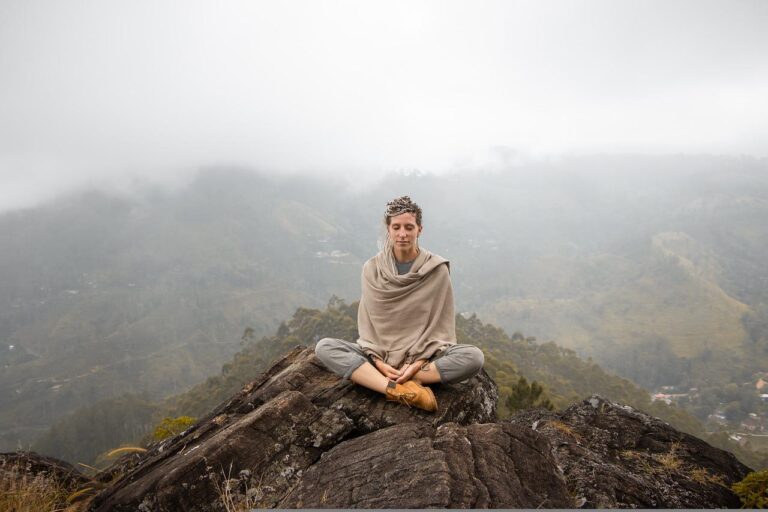
Sacred Processes *
What are Sacred Processes of Healing, Feeling, and Awakening?
The self-defeating habits, divisive beliefs, exclusionary mindsets, and destructive patterns we continue to witness throughout humanity suggest that a fundamental shift in where and how we place our attention may be more relevant than ever.
Across trustworthy spiritual traditions and teachings focused on feeling, healing, awakening, and conscious clarity, we repeatedly encounter one or more practices that help turn our attention inward. I refer to these as Sacred Processes of Awakening. They include meditation, yoga, introspective self-inquiry, surrender or letting go, nature immersion, receptive silence, and prayer.
Throughout human history, awakened beings and spiritual teachers have offered these processes in many different forms, guiding people toward deeper peace, clarity, and direct understanding of existence. Some approaches involve disciplined practice, while others invite effortless awareness and surrender. Yet at their heart, Sacred Processes share a similar intention: to help us discover what we truly are — and what we are not — beyond conditioned beliefs, identities, and habitual ways of perceiving ourselves and the world.
This points to an important distinction between spirituality and practices that are pursued merely to feel better, appear better, or adopt another belief system. Conscious spirituality is ultimately an exploration of the nature of reality and existence itself, genuine self-discovery. Sacred Processes are not asking us simply to believe. They invite us to inquire, experience, and discover what may be directly known for ourselves.
Below, you will find guidance from several spiritual teachers and masters who express these processes in their own unique ways.
Discovering Meditation
Meditation is any technique or methodology that helps: (1) loosen or transcend the primal identification with the body-mind complex; (2) illuminate the apparent illusion of separation; and/or (3) gently focus, relax, or turn attention inward toward bodily sensations, thoughts, emotions, and mental processes.
It is also important to recognize that, although meditation may appear to require effort and may be practiced as an activity with a beginning and an end, our essential being is already meditative in nature. The deeper aim of true spiritual teaching is not merely to become better at meditation, but to awaken to and realize that ever-present dimension of being — what is often called Self-Realization.
Discovering Yoga
Like meditation, Yoga can be understood as any technique or methodology that helps: (1) loosen or transcend the primal identification with the body-mind complex; (2) illuminate awareness of the apparent illusion of separation; and/or (3) turn attention inward toward bodily sensations, breath, thoughts, emotions, and mental processes.
One useful distinction, however, is that meditation is often approached primarily through attention and awareness, while Yoga more directly includes the body as part of the process. Through posture, movement, breath, stillness, and disciplined attention, Yoga can help bring the body and mind into greater harmony and conscious awareness.
Even so, both meditation and Yoga typically involve some degree of concentration, attentiveness, and inward focus — especially in the beginning. Over time, however, the deeper aim is not simply to perfect a technique, but to awaken beyond habitual identification with body and mind and discover the deeper unity of being.
Discovering Self Inquiry
Self-Inquiry can be understood as a form of meditation in which attention is deliberately focused on a specific inward question. More specifically, Self-Inquiry, or Meditative Self-Inquiry, involves asking oneself questions directly and sincerely. For example, one might isolate a troubling thought and ask, “Is this thought true? Is this thought absolutely true?” as in The Work of spiritual teacher Byron Katie.
At a deeper level, perhaps the most fundamental question of Self-Inquiry is simply: “Who or What am I?” — a question strongly associated with the great Hindu sage Ramana Maharshi. The practice may seem simple, obvious, or even elementary. Yet some of its deepest insights can arise when the question is asked inwardly without immediately answering it with the thinking mind. Instead, one allows the question to remain open within awareness — with patience, self-honesty, curiosity, and as little bias or expectation as possible.
In that openness, the purpose is not necessarily to arrive at another intellectual conclusion, but to allow something deeper than conceptual thought to reveal itself.
Letting Go or Surrendering to God
We could say that the ultimate pointing of all Sacred Processes of Awakening is this: allow everything to be exactly as it is.
Through the mystery of identifying ourselves primarily as the body and mind, we somehow come to give the thinking mind authority over our lives. The survival-based energies of our experience then begin constantly interpreting, resisting, controlling, and manipulating the spontaneous felt sense of life. Through obsessive thinking, striving, and acting out the compulsions of the body, we become lost in the attempt to make life give us happiness, joy, serenity, fulfillment, wholeness, and worthiness. Yet no amount of manipulating life can provide the absolute sense of completeness we are seeking.
The guidance of letting go — of surrendering to God, Higher Power, the Universe, or whatever language resonates — is ultimately about awareness: allowing everything to be as it is without continually buying into the mental stories that oppose the peace of this here and now — God, Reality, the Cosmos.
Nature Immersion
Why is it that no matter who or what we think or believe ourselves to be, spending time immersed in nature so often relaxes the body and quiets the mind?
Most of us already know, somewhere within ourselves, that hiking, sitting beside a lake, walking along the beach, or spending time in a forest can be far more restorative than remaining caught in our obsessions, compulsions, worries, and addictive patterns. And yet, even when we know certain changes in our daily habits could support our overall well-being, we may still struggle to step away from overthinking, constant stimulation, and familiar routines.
The truth is simple: we know that communing with trees, fresh air, mountains, streams, lakes, birds, animals, and the living world around us can help us in ways we may not yet fully understand. Perhaps one of the deeper reasons is this: we ARE nature. Yet we often live as though we are separate from it. Honor your nature. Take a walk in the forest. Sit beside a lake. Spend some time alone beneath the open sky. Allow the mind to settle, the body to soften, and your attention to return to something more natural within you.
Receptive Silence
Receptive Silence or Meditative Contemplation
Receptive Silence could also be considered a form of meditative contemplation because, at the heart of both, is a willingness to discover insight, understanding, or a deeper sense of reality through awareness rather than through constant mental analysis.
A subtle distinction, however, is that Receptive Silence suggests an openness to receiving or illuminating insight beyond the usual commentary of the thinking mind. It is an innocent receptivity to whatever may arise in consciousness, without expectation, interpretation, or immediately turning the experience into a story. In that sense, Receptive Silence is closely related to meditation, but with an emphasis on complete openness — like walking alone in a forest, sitting beside an ocean or lake, or simply becoming still with a heartfelt, nonmental willingness to feel, heal, and awaken.
Meditative Contemplation is included here because it can function in much the same way. For example, one might read a passage from a spiritual text and then quietly contemplate the words in receptive silence — not trying to force a meaning intellectually, but allowing the deeper wisdom of the words to reveal itself through direct awareness.
Prayer
For centuries — even millennia — prayer has taken on many meanings, forms, and seeming techniques. Yet at the heart of prayer, whether one relates to it spiritually or not, there is often a deep longing to be free from suffering — and, perhaps more deeply, to be free from the illusion of separation that so often defines the human experience.
Traditionally, prayer has often become a way of asking for help with a specific problem, loss, fear, or challenge. Yet there can be a subtle illusion of control hidden within that asking: God, please fix this. Remove this. Change this circumstance. Take this pain away. In that moment, prayer can become another way of resisting what is already happening rather than opening to the deeper truth, wisdom, or grace that may be present within the experience itself.
For example, someone may lose a job or a loved one and immediately pray for a new job, for the pain to disappear, or for life to return to the way it was. Another possibility is to pray from a place of surrender and gratitude: Help me see clearly. Help me understand what this experience is revealing. Help me receive the wisdom, grace, or conscious clarity available here.
In this way, prayer becomes less about trying to control Reality and more about becoming receptive to it.
As with all Sacred Processes of Feeling, Healing, and Awakening, the deeper essence of prayer is not simply to manipulate circumstances into something the mind prefers, but to awaken more fully to the truth of existence — dissolving the illusion of separation between the self we imagine ourselves to be and Reality, God, or the sacred wholeness of life itself.

* Note: The individuals, organizations, and resources featured on this page are not affiliated with Peace President United. Inclusion is for educational and informational purposes only and does not imply endorsement of PPU.