
Nature First Initiative
Topsoil is a living ecosystem, home to trillions of microorganisms within an extraordinary web of life. Without healthy soil, we cannot grow our food or sustain life as we know it. Let us wake up now!
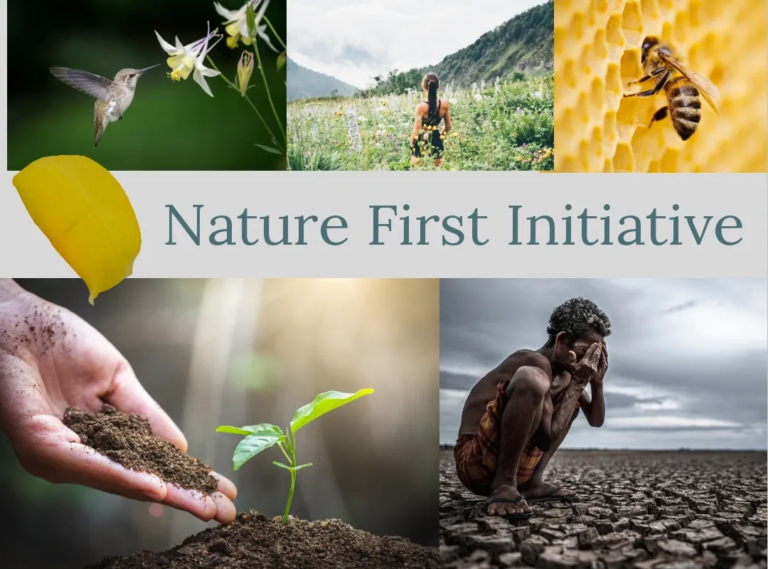
What is the Nature First Initiative? *
The Nature First Initiative is a global movement dedicated to making ecology, nature-based learning, soil health, soil regeneration, and outdoor education greater priorities throughout our educational systems. This means actively and consciously encouraging educational and governmental policies that recognize the importance of ecological awareness, regenerative practices, and our relationship with the natural world as essential parts of learning and life.
Fundamentally, many of us appear to have lost intimate contact with the very source of life: Nature. We are Nature. It is time to support our children and grandchildren, our future generations, by giving them greater opportunities to get outdoors, put their hands in the soil, experience natural ecosystems, grow food, and learn directly from the living world around them.
It is also time to honestly examine how much of our attention has shifted toward screens, social media, video games, entertainment, competition, and other activities that can increasingly separate us from Nature, ourselves, and one another. Rather than rejecting technology or modern life, the Nature First Initiative invites us to restore a healthier balance by consciously choosing more Earth-friendly, regenerative, and life-affirming ways of living. The time for change toward inner and outer well-being is always now.
There is good news! We are the change we are seeking in the world!
Did You Know?
Dear Humanity,
Did you know that the life-sustaining topsoil upon which much of our food production depends is remarkably thin, often only several inches deep? And while healthy soil is alive with extraordinary biological activity, forming even an inch of new topsoil can take hundreds of years. Yet erosion, desertification, and destructive land-management practices continue degrading fertile soil throughout the world.
Did you know that healthy soil is alive with extraordinary biological activity? A single handful can contain hundreds of billions of microorganisms representing thousands of species. Bacteria, fungi, plant roots, insects, earthworms, organic matter, minerals, water, and air participate in an amazingly complex living system that helps make terrestrial life and agriculture possible.
“While the entire soil profile down to bedrock can span a few feet, the Earth’s vital, crop-sustaining topsoil is a fragile layer averaging just 5 to 10 inches deep. With a single inch taking up to 1,000 years to form, intensive agriculture and desertification are swallowing millions of hectares globally each year, putting our long-term food security at severe risk.” [source]
And did you know that approximately 95 percent of the food we consume depends upon soil? Yet soil erosion and degradation are occurring throughout the world, accelerated in many places by unsustainable agricultural practices, deforestation, overgrazing, loss of organic matter, and leaving soil inadequately protected. Creating only a few centimeters of topsoil can take centuries, while poorly managed soil can be lost far more quickly.
There is GOOD News!
Fortunately, this is not simply a story of destruction. We know a great deal about improving soil health. Practices such as keeping living roots in the ground, using cover crops, increasing biodiversity, reducing unnecessary soil disturbance, and restoring organic matter can improve biological activity, water infiltration, soil structure, resilience, and agricultural productivity.
So the message is not that humanity has some predetermined number of harvests remaining. The message is that healthy soil is essential to life, some of it is being degraded at alarming rates, and we possess practical knowledge that can help protect and regenerate it. The question is whether we are willing to make that a priority.
Below you will find videos, information, and resources exploring these ecological challenges and, more importantly, what we can consciously do about them.
On a Personal Note
For years, I lived in denial of many of the natural laws of life, both practically and existentially. I often avoided looking deeply at our collective challenges because I was unconsciously caught up in my own egoic agendas rooted in competition, survival, self-preservation, and the pursuit of personal fulfillment.
The good news is this: somehow, through Sacred Processes of Awakening and Sacred Guidance greater conscious clarity arose within my experience regarding my own innocent ignorance, arrogance, greed, and denial, as well as the possibility of discovering a deeper and more lasting fulfillment, peace, and joy within.
That clarity began with a new dimension of self-honesty, compassionate open-mindedness, and a willingness to embrace inclusion rather than division. As I became more willing to walk through my fear of change and inner transformation, my eyes began opening to personal and collective patterns that no longer seemed to serve me, humanity, or our Home Planet Earth. Among them were agricultural and ecological practices I had previously known very little about. Those realizations became part of the inspiration for this section of Peace President’s Global Awareness Project.
Important Questions to Ask Ourselves
Where does the biological substance of our physical bodies ultimately come from? Much of it comes through the food and water that sustain us.
And where does our food come from?
The grocery store?
Or, before that, farms, plants, animals, water, sunlight, ecosystems, and the Earth?
Healthy soil plays an extraordinary role in that living process. It provides physical support for plants while storing and cycling water and nutrients, sustaining enormous communities of organisms, and helping create the conditions in which much of our food can grow.
So perhaps the more important questions are these:
Are we interested in understanding and protecting the living systems that sustain us?
Are we willing to leave our Earth home in a healthier condition for ourselves, our children, and future generations?
The sacred soil of our Home Planet Earth is far more than lifeless dirt. Healthy soil is an intricate ecosystem in which microorganisms, organic matter, minerals, roots, water, air, and countless forms of life continually interact. When these systems are damaged, our ability to grow food and sustain healthy ecosystems can also be damaged.
If something so fundamental to our food, ecosystems, and physical existence is being degraded partly through human activity, doesn’t it make sense that we become more conscious of what is happening and learn what we can do differently?
Willingly Opening to Insights and Conscious Clarity
Let us embrace a new dimension of loving-kindness and collective responsibility so we can respond wisely to our ecological challenges while there is still so much we can protect, restore, and regenerate. Let us no longer turn a blind eye to our practical responsibilities as members of Team Earth, as I admittedly did for much of my own life.
It is time.
Please take a heartfelt moment to explore the videos and resources below, question what you encounter, and discover for yourself how each of us might participate in creating a healthier relationship with the living Earth that sustains us.
As Loving Understanding,

Peace President
Topsoil Extinction: Is our food supply dying? You decide...
Getting Honest about Climate Crisis
Well…for decades now, Al Gore, former Vice President of the United States, has been bringing attention to climate change and humanity’s relationship with our Home Planet Earth. I recently watched both of his films, and once again humility illuminated itself within me. I could see how, for many years, arrogance, fear, distrust, and denial had misdirected my attention away from important matters, including the increasingly evident effects of human activity on our planet.
I remember watching his first film, An Inconvenient Truth, years ago and actually laughing at Al Gore. I was caught up in the memes, stories, distrust, and collective and personal denial surrounding the issue. I thought it was another governmental BS ploy. Yet as I look back now, the deeper truth was my own unwillingness to genuinely investigate what was being presented. I was more interested in serving my false sense of self through self-images, identities, and concepts than questioning my assumptions and becoming more honestly informed.
You might say that I finally began getting out of my own way psychologically, mentally, emotionally, and spiritually. Through self-honesty, forgiveness, questioning core beliefs and assumptions, examining generational traditions and cultural identities, and becoming more willing to admit what I simply did not know, I began noticing what Al Gore and, more importantly, climate scientists throughout the world had been pointing toward. Thank goodness!
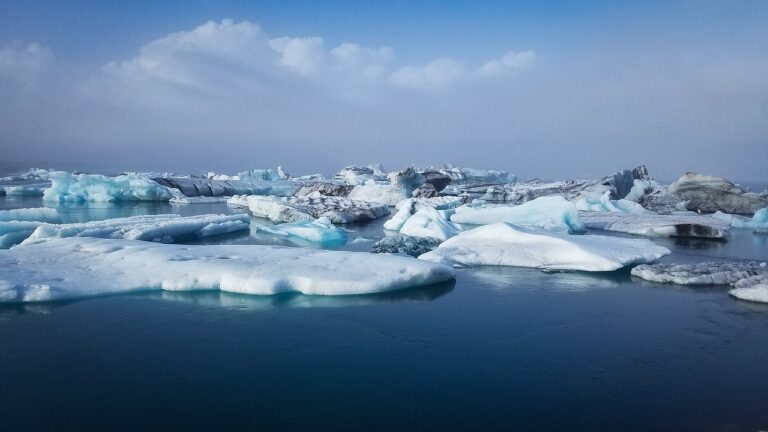
Personal and collective denial can prevent us from responding wisely to realities we would rather not face. Human-caused climate change is already affecting natural and human systems throughout the world, contributing to glacier retreat, sea-level rise, increasing heat extremes, heavier precipitation, and growing risks from several other climate-related hazards. Whatever our political identities or past assumptions may have been, the condition of our Home Planet Earth deserves our willingness to look carefully, question honestly, and become better informed. I encourage everyone to take the time to watch the following films and explore the supporting resources for themselves.
The Paris Agreement toward Reducing Global Warming
* Note: The individuals, organizations, and resources featured on this page are not affiliated with Peace President United. Inclusion is for educational and informational purposes only and does not imply endorsement of PPU.